
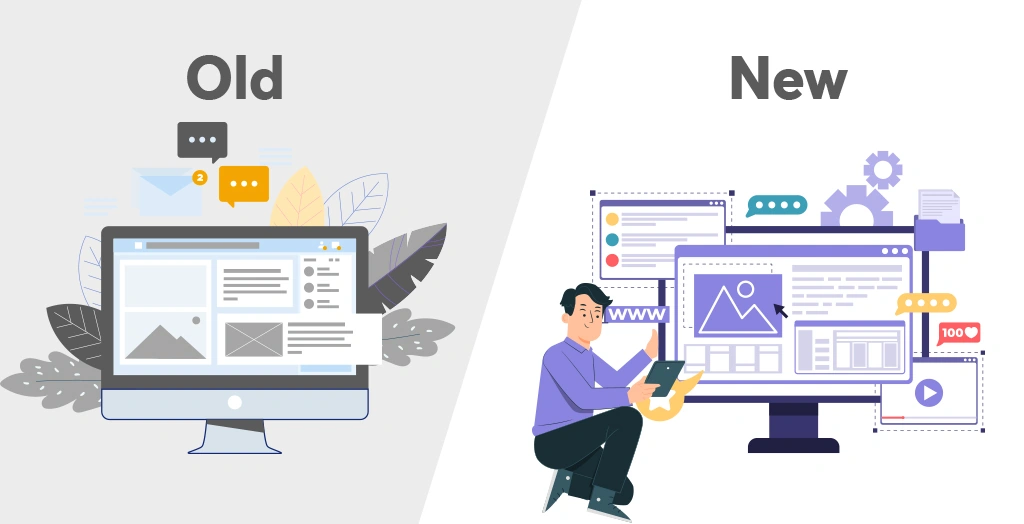
A Modern Design Doesn't Always Mean a Better Website
A website can look modern and still fail to deliver results.
A new layout, fresh colours, and better images may improve the appearance, but they won't fix a confusing customer journey, slow pages, difficult forms, or outdated business processes.
That's why a redesign should start with a more important question: What isn't working on the current website, and what should work better after the redesign?
Start With the Problems, Not the Design
Before changing the appearance, understand how people currently use your website.
Are visitors finding the information they need? Can they easily understand your services? Is it simple to contact your team, request a quote, book an appointment, or complete a purchase?
If visitors are leaving because they can't find the right information or don't know what to do next, changing the colour scheme won't solve the problem.
A useful redesign identifies these friction points and removes them.
A better website isn't just one that looks newer. It's one that makes important tasks easier.
Improve the Journey From Visit to Action
Your website should guide visitors naturally from discovering your business to taking the next step.
A potential customer may arrive through Google, an advertisement, social media, or a referral. Once they land on your website, they should quickly understand what you offer, why it matters, and what they can do next.
The exact journey depends on your business, but the principle remains the same: don't make visitors work to become customers.
Give Your Business More Than a Better Front End
Your website also affects how your team works behind the scenes.
If employees manually manage enquiries, copy customer information between systems, handle bookings over the phone, or update multiple platforms separately, a redesign may be the right opportunity to improve those processes.
Depending on your business, the new website could connect with:
CRM Systems
Booking & Reservation Platforms
Payment Gateways
Customer Portals
Inventory Systems
Third-Party APIs
Automated Notifications
Business Workflows
This turns the website from a simple online presence into a useful part of your business operations.
Don't Lose the Value You've Already Built
A redesign can also affect your existing search visibility.
Your website may already have pages ranking on Google, backlinks from other websites, and organic traffic bringing potential customers to your business.
Changing URLs or removing important pages without proper planning can put that value at risk.
A well-planned redesign should review:
- Existing organic traffic
- Important ranking pages
- URL structure and redirects
- Page titles and descriptions
- Internal linking
- Content structure
- Mobile usability
- Website performance
The goal isn't to choose between better design and better SEO. Your new website should support both.
Know When a Redesign Isn't Enough
Sometimes the existing website has a strong technical foundation and only needs improvements to its design, user experience, content, or performance.
In other cases, the technology itself is holding the business back. If the website can't support your required integrations, business workflows, or future functionality, repeatedly modifying the old platform may not be the best investment.
| Your Situation | A Practical Approach |
|---|---|
| Outdated appearance | Visual redesign |
| Confusing user experience | UX-focused redesign |
| Poor performance | Technical improvements |
| Limited integrations | Custom development |
| Outdated technology | Website rebuild |
| Complex business requirements | Custom website solution |
The right decision depends on the problems behind your website—not simply how old it looks.
Build Something That Works Better Tomorrow
A website redesign is a significant investment, so it should not be planned only around today's requirements.
Your business may introduce new services, attract more customers, add integrations, or change internal processes.
You don't need to build every possible feature immediately. But the foundation should be flexible enough to support realistic future improvements without forcing you to start from scratch again.
The best result is a website that feels simpler for your customers, more useful for your team, and more capable of supporting your business.
A Better Website Should Create a Better Business Experience
The success of a redesign shouldn't be measured by how different the new website looks from the old one.
Look at what changed after launch. Can customers find information faster? Are more people completing enquiries or bookings? Is your team spending less time on manual tasks? Does the website perform better across mobile devices? Can your business add new functionality without major technical limitations?
These are the improvements that make a redesign worthwhile.
Planning to Redesign Your Website?
Before investing in a new look, let our team help you understand what your existing website really needs. Whether it's a focused redesign or a complete custom website solution, we can help you plan a website around your users, business processes, and long-term goals.