
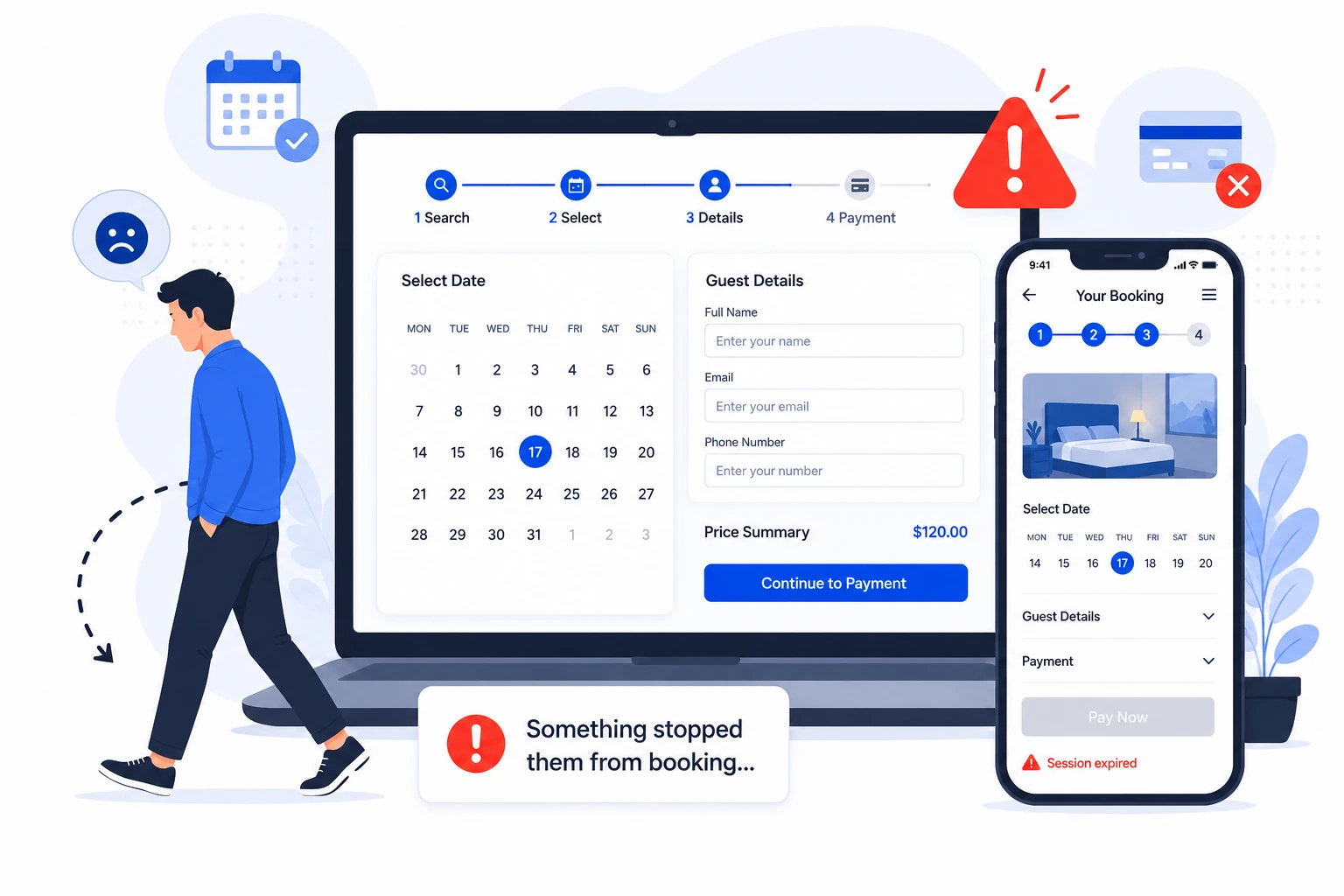
Getting visitors to your booking website is only the first step. The real success comes when those visitors become confirmed customers.
Many businesses invest in SEO, paid advertising, and social media to attract traffic, but still struggle to increase bookings. In most cases, the issue isn't the marketing—it's the booking experience itself. Even small obstacles during the reservation process can cause visitors to leave before completing a booking.
According to multiple conversion studies, the average website converts only 2–5% of its visitors, meaning most people leave without taking any action. For businesses that rely on reservations, improving the booking experience can often produce better results than simply spending more on advertising.
If your booking website receives visitors but generates fewer reservations than expected, these are the areas worth improving.
If you're planning to build or upgrade your reservation system, explore our Booking & Reservation Website Development Services to see how we design booking platforms that reduce friction and improve conversion rates.
Make the Booking Process Simple
A visitor shouldn't have to think about how to make a reservation.
Every additional step increases the chance that someone will leave before completing their booking. Keep the process straightforward by asking only for the information that's actually required. Let users select a service, choose an available date or time, and complete their reservation with minimal effort.
Show Real-Time Availability
One of the quickest ways to lose a customer is by showing outdated availability.
Visitors become frustrated when they spend time selecting a service only to discover it's unavailable during the final step.
Displaying real-time availability for appointments, rooms, tables, or services helps customers make faster decisions while building confidence in your booking system. When people know the information is accurate, they're more likely to complete the reservation.
Build Trust Before Asking for a Reservation

People don't book with businesses they don't trust.
Before asking visitors to enter payment details or personal information, give them reasons to feel confident about choosing your business.
Simple trust signals can have a significant impact, including:
- Customer reviews and testimonials
- Clear business contact information
- Secure payment options
- Transparent pricing
- Cancellation and refund policies
- Professional website design
These small details help remove uncertainty and encourage visitors to continue with their booking.
Make Mobile Booking Effortless
Today, many reservations are completed on smartphones.
If your booking website is difficult to navigate on mobile devices, visitors are unlikely to stay long enough to finish the process.
Buttons should be easy to tap, forms should be short, and pages should load quickly. A seamless mobile experience allows customers to complete bookings wherever they are without frustration.
Keep Pricing Transparent
Unexpected charges are one of the biggest reasons customers abandon online bookings.
Whether it's service fees, taxes, or additional costs, visitors appreciate knowing the complete price before reaching the final confirmation page.
Transparent pricing creates confidence, reduces hesitation, and helps customers make faster decisions.
Remove Distractions During Checkout
Once someone begins the booking process, your goal is to help them finish it.
Avoid unnecessary pop-ups, promotional banners, unrelated offers, or excessive navigation options that interrupt the booking journey.
A focused reservation process allows visitors to concentrate on completing their booking instead of being distracted by other content.
Confirm Every Booking Immediately
Customers expect confirmation the moment they complete a reservation.
Automatic confirmation emails or SMS notifications reassure customers that their booking has been successfully received while reducing unnecessary support enquiries.
A simple confirmation also creates a more professional customer experience and increases confidence in your business.
Learn Where Visitors Drop Off
Not every visitor who leaves your website is lost forever, but understanding why they leave is essential.
Use analytics tools to identify where users abandon the booking process. You may discover that visitors leave during payment, while filling out long forms, or after viewing pricing.
These insights allow you to make targeted improvements instead of redesigning your entire website. Often, fixing one or two friction points can significantly increase booking conversions.
Choose a Booking Solution That Matches Your Business
Every business has a unique booking process, so a one-size-fits-all solution rarely delivers the best experience.
For example, a hotel may need room availability, seasonal pricing, and multiple room types. A medical clinic requires appointment scheduling with doctors, patient information, and automated reminders. A salon or spa often needs staff availability, service duration, and package bookings, while a travel agency may require tour schedules, payment integration, and cancellation management. Similarly, an event management company needs seat availability, ticket limits, and real-time reservation updates.
Using generic booking software may cover basic requirements, but as your business grows, you'll often face limitations in customization, integrations, and workflow management.
Hotels & Hospitality
Room availability, seasonal pricing, multiple room types, and reservation management.
Medical Clinics
Doctor appointment scheduling, patient information, and automated reminders.
Salons & Spas
Staff availability, service duration, package bookings, and scheduling.
Travel Agencies
Tour schedules, payment integration, availability, and cancellation management.
Event Management
Seat availability, ticket limits, and real-time reservation updates.
A custom booking website is built around your business processes, making it easier to manage reservations, automate operations, and deliver a smoother booking experience for your customers.
Final Thoughts
Increasing bookings isn't always about attracting more visitors. In many cases, it's about improving the experience for the visitors you already have.
A faster booking process, transparent pricing, real-time availability, mobile-friendly design, and a trustworthy user experience all work together to improve booking conversions.
Before increasing your marketing budget, take a closer look at your booking website. Small improvements in the booking journey can make a measurable difference in how many visitors become paying customers.
If you're unsure where your booking website is losing customers, our team can review your booking experience, identify conversion bottlenecks, and recommend practical improvements tailored to your business.