
Every Day, People Search for Thousands of Different Things
For example, your marketplace website connects customers with local service providers across different cities and countries.
Everything looks good.
But there's one problem.
Every day, potential customers search Google using thousands of different keyword combinations.
This is exactly where Programmatic SEO becomes valuable.
What Is Programmatic SEO?
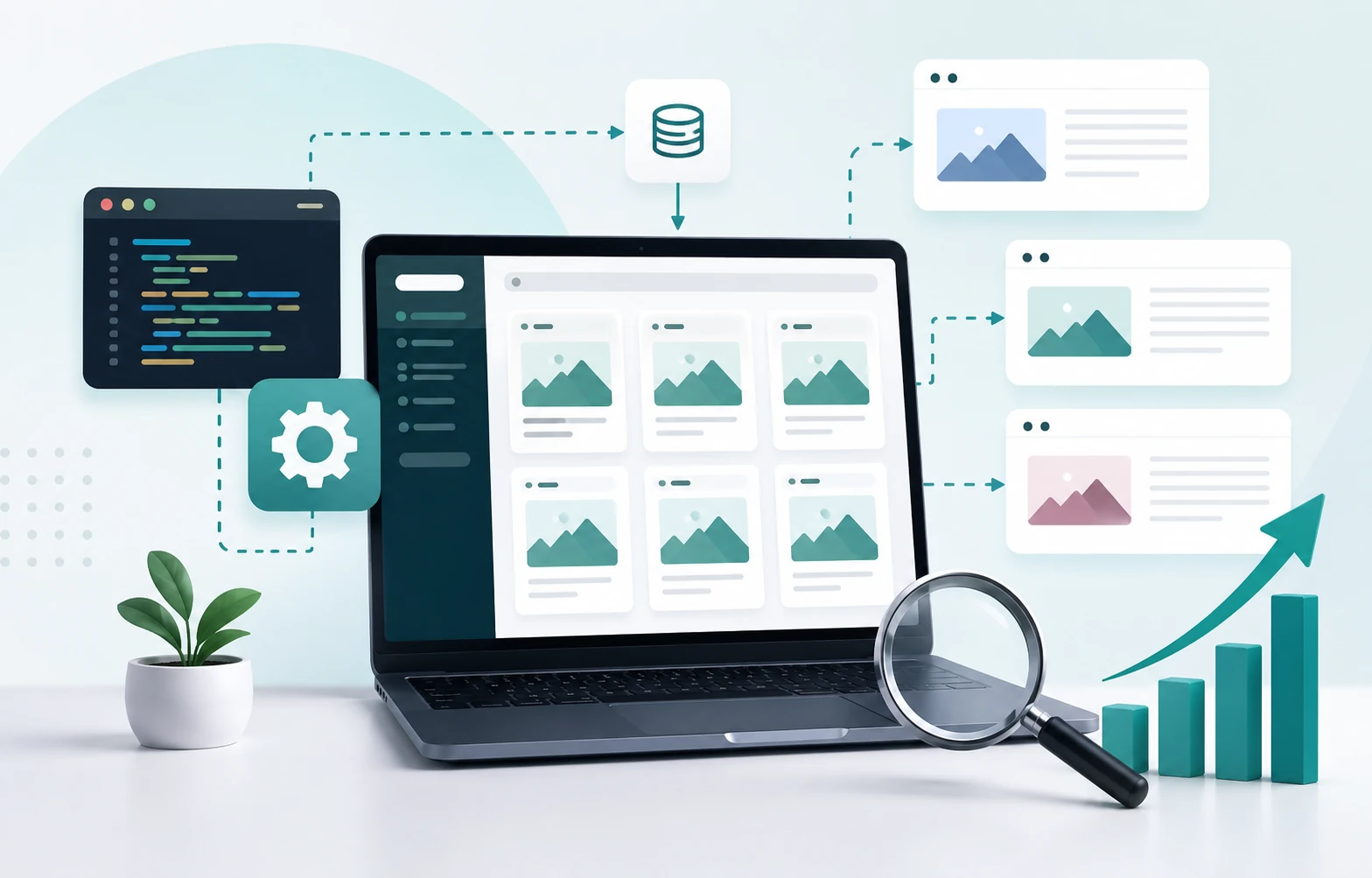
Programmatic SEO is a strategy that allows businesses to create hundreds, thousands, or even millions of SEO-friendly pages using structured data, templates, and automation instead of writing every page manually.
Instead of creating every page one by one, a website automatically generates unique pages based on data.
For example, instead of manually creating:
a programmatic SEO system can generate these pages using a single template while keeping the content relevant to each service and location.
The goal isn't simply to create more pages.
The goal is to create pages that answer specific search queries people are already typing into Google.
Why Traditional SEO Doesn't Always Scale
Traditional SEO works well when your website has only a small number of pages.
But as your marketplace grows, so do the opportunities.
Imagine creating pages for:
- 🛠 Every service
- 🛠 Every location
- 🛠 Every service + location combination
- 🛠 Every product category
- 🛠 Every product
- 🛠 Every service provider
For example, a marketplace could have:
Even creating hundreds of these pages manually would take months.
Managing updates would take even longer.
For marketplaces and e-commerce websites with large numbers of services, products, providers, or locations, manual content creation quickly becomes difficult to maintain.
Programmatic SEO helps solve this scalability problem.
Why Does Your Website Need Programmatic SEO?
Many businesses unknowingly miss thousands of potential visitors because they only target broad keywords.
People rarely search using just one or two words.
Instead, they search for very specific services, products, locations, questions, and needs.
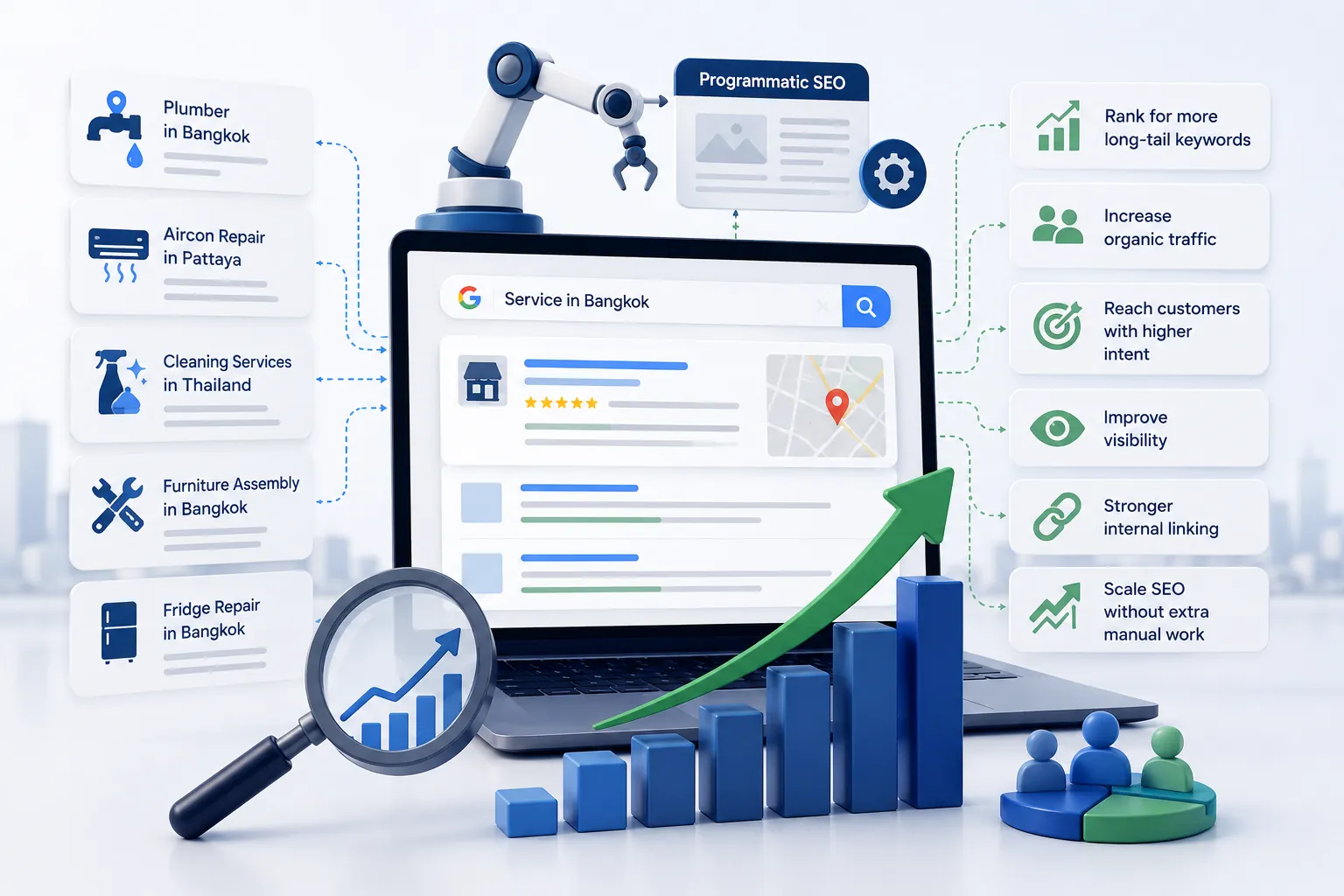
Programmatic SEO helps your website create pages that match these highly targeted searches.
This can help your website:
- ⚡ Rank for more long-tail keywords
- ⚡ Increase organic traffic
- ⚡ Reach customers with higher purchase intent
- ⚡ Improve website visibility
- ⚡ Build stronger internal linking
- ⚡ Scale SEO without manually creating every page
- ⚡ Keep content consistent across large websites
Rather than relying on a handful of pages, your website becomes capable of answering hundreds or thousands of different search intents.
How Programmatic SEO Works
A Programmatic SEO system combines three important elements:
Structured Data
Information stored inside a database, spreadsheet, CMS, or API.
For a marketplace, this could include:
- Service name
- Location
- Service provider
- Service category
- Pricing information
- Availability
- Service description
Dynamic Templates
A single page template that automatically displays different information based on the data.
For example, the same template could generate:
- Plumber in Bangkok
- Plumber in Pattaya
- Cleaning Services in Bangkok
- Aircon Repair in Pattaya
without manually designing each page.
SEO Optimization
Each generated page includes its own:
- SEO title
- Meta description
- URL
- Heading structure
- Internal links
- Structured data
- Relevant content
The result is a scalable website that can continue growing as new services, products, locations, and providers are added.
Which Websites Benefit the Most?
Programmatic SEO isn't necessary for every website.
It works best when a business manages large amounts of structured information.
Common examples include:
The more structured content your business manages, the more valuable Programmatic SEO becomes.
Common Mistakes Businesses Make
Many businesses misunderstand Programmatic SEO.
They assume it's simply about generating thousands of pages.
It's not.
Publishing hundreds of low-quality or duplicate pages can actually hurt your website.
Common mistakes include:
- ⚠️ Thin content
- ⚠️ Duplicate content
- ⚠️ Weak internal linking
- ⚠️ Generic metadata
- ⚠️ Poor user experience
- ⚠️ No unique value for visitors
For example, simply creating "Plumber in Bangkok" and "Plumber in Pattaya" with exactly the same content and only changing the location name doesn't create a useful page.
Each page should provide genuinely relevant information for the user.
Google rewards pages that genuinely help users—not pages created just to increase page count.
Quality still matters.
Can AI Help Programmatic SEO?
Absolutely—but AI should support the process, not replace it.
AI can help generate service descriptions, improve templates, organize structured data, and speed up content creation.
For a marketplace, AI could help create useful content around different service and location combinations while keeping the information relevant to the specific page.
However, every page should still provide useful, accurate, and relevant information.
The best results usually come from combining AI, structured data, thoughtful SEO planning, and human review.
Final Thoughts
Programmatic SEO isn't about creating thousands of pages for the sake of having more content.
It's about helping your website appear when people search for the specific products, services, locations, or solutions your business offers.
For a marketplace, this could mean helping someone searching for a plumber in Bangkok find the right page instead of showing them a generic services page.
When implemented correctly, Programmatic SEO can improve organic visibility, target long-tail keywords, increase qualified traffic, and make large websites much easier to scale.
Instead of asking, "How many pages should my website have?" , a better question is:
"How many relevant searches could my website answer?"
That's where Programmatic SEO creates real value.
Need a Programmatic SEO Solution for Your Website?
Build scalable SEO pages around your services, locations, products, or other structured data with a solution designed around your business needs.