Home
Blog
Web Development Best Practices: From Concept to Launch
Website Development
Web Development Best Practices: From Concept to Launch
A successful website starts long before the first line of code. Discover the key steps from defining your purpose and planning to designing, developing, testing, and launching your website.
August 2026
Updated August 2026
CumulativeApps Team
Web Development Best Practices: From Concept to Launch
01Introduction
Web Development Is More Than Writing Code
We are living in an era of digitalization, where countless services, businesses, and useful information are available at our fingertips. With just a few clicks, people can find information, explore services, connect with businesses, and complete many tasks without having to be physically present.
Why has this become possible? A major reason is the growth of websites and web-based services. Today, having a strong digital presence is no longer just an option for businesses. As the world continues to move forward digitally, businesses that do not adapt may find it difficult to keep up with changing customer expectations.
Web development plays an important role in this transformation. It helps businesses turn their ideas, services, and goals into functional digital experiences that people can access from anywhere.
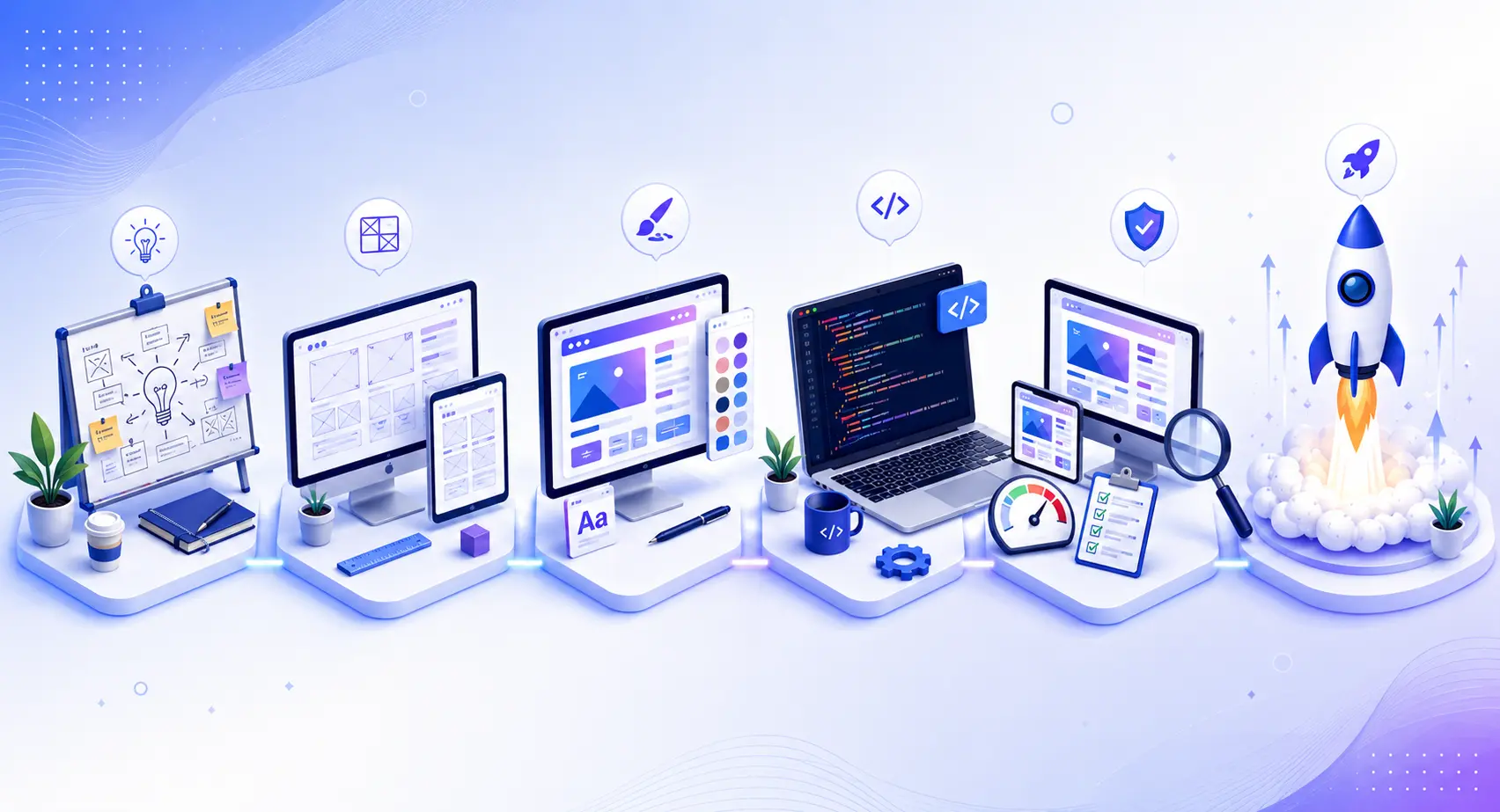
But building a successful website is not simply about writing code and making it live. It starts much earlier—with understanding the purpose, knowing the audience, planning the right features, designing for users, developing carefully, testing thoroughly, and finally launching the website.
So, before starting actual web development, let's understand the important steps and best practices that can help turn an idea into a successful website—from concept to launch.
A strong website is the result of a process—not just a piece of code.
02Understand
Ask the Right Questions Before Starting Development
Before starting the actual web development process, there are some important questions that create the foundation for the entire project. Answering them gives you a clearer direction for the website's content, features, design, and functionality.
01
Why do you need a website or web application?
This is the first and most important question to answer. In today's digital world, a website represents your business, services, and products on a digital platform. It provides visitors with information about your business and introduces your services to them even when you are not physically present. A website can also help reduce repetitive work and manual efforts by providing information and services digitally.
02
Who are your customers?
Answering this question is important before starting any web development project. When you know your customers or target audience, you can plan your website's design, content, and structure accordingly. Customers, visitors, or users are an important part of any website. Without understanding them, even a well-designed, modern, and properly structured website may not achieve its purpose effectively.
03
What do you want your customers to do?
When you know what actions you want your audience or users to take, you have a much clearer direction for the project. Once you understand the actual purpose of developing the website, you can start planning and turning your vision into a practical web solution.
If you do not answer these questions before starting web development, your website might look impressive, modern, and perform well technically, but it can still fail to achieve its purpose of attracting the right customers and converting them into actual customers. When you answer all of these questions correctly, you get a clearer understanding of how web development can solve your problems and support your business as a technical solution. For example, suppose you are a travel agency and want a website that helps your customers book their journeys and makes their travel experience easier. Your customers are mainly travelers and tourists, and you want them to make bookings through your website.
Once you know the purpose, the audience, and the desired action, you have the foundation needed to plan the website properly.
03Plan
Planning Before Actual Development
After answering the initial questions, you have a clearer understanding of the project's main purpose. Now you can turn your ideas into a practical plan instead of developing the website blindly.
Before starting development, determine what needs to be placed on the website, which features customers need, and what calls-to-action will help the website achieve its purpose efficiently.
Content
What should be on the website?
Define the pages, information, services, products, media, and other resources users need.
Features
What should users be able to do?
Create a clear checklist of the functionality customers need to interact with and use the website.
Action
What should users do next?
Define the right CTAs so visitors can move naturally toward the actions that matter to the business.
Once the content, features, and overall requirements are planned, designers and developers can turn the vision into a structured and functional website.
The difference a clear plan makes
Without Planning
No clear goals
Requirements may be misunderstood
More revisions and changes
More development time
Higher possibility of unnecessary cost
With Planning
Clear project goals
Defined requirements
Better communication
More organized development
Better final result
04Design
Web Design With Users in Mind
Before development begins, creating a website design is essential. Without a proper design, there can be confusion about what belongs where, how information should be presented, and how users should move through the website.
A proper design makes the development process easier and more organized. Designers create the overall design and blueprint of the website, showing how each part should look and work. Front-end and back-end developers can then work according to this design structure.
01
Clear structurePages and information are organized so users can understand them quickly.
02
Easy navigationVisitors can move through the website without unnecessary friction.
03
Strong hierarchyImportant information and actions receive the attention they deserve.
04
Responsive experienceThe interface should remain useful and consistent across different devices.
Web design determines the layout and structure of each page, smooth and easy navigation, thoughtful content hierarchy, overall appearance, and responsiveness across different devices. Once the website design is completed, the next step is to develop the website according to the design while ensuring that it serves its intended purpose.
05Build
Web Development and Optimization
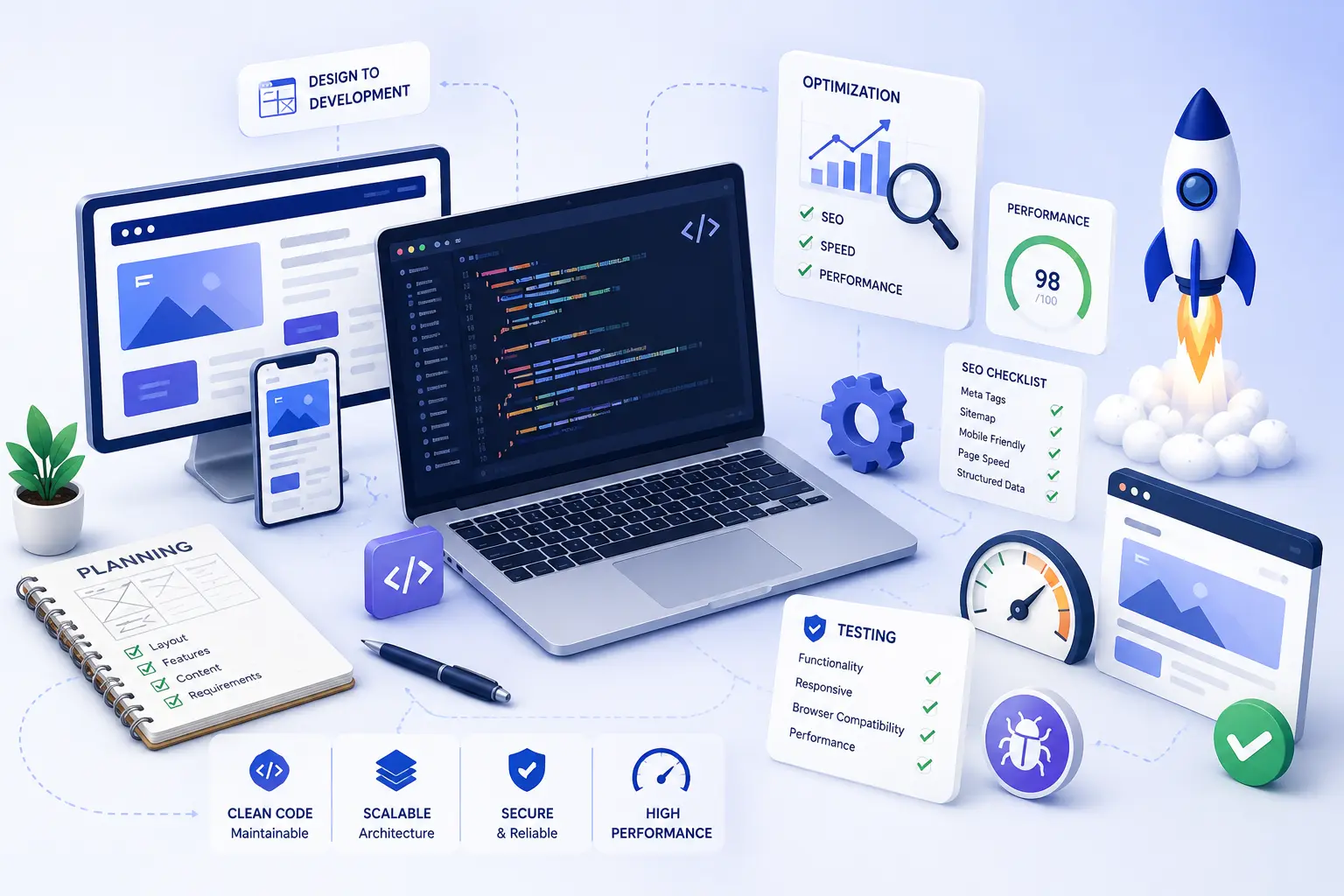
After the website design is completed, the actual development begins. Now, the design and vision of the website are transformed into reality by writing clean, maintainable, optimized, and scalable code.
Web development is the stage where the planned design, features, and requirements are turned into a functional website that serves your business goals.
Writing code simply to build a website is not enough. Clean, maintainable, and optimized code makes it easier to maintain the website, improve its performance, and integrate future updates and features.
Website optimization is also an important part of the development process. After completing development, it is important to optimize the website for SEO and performance. This helps the website perform better, improve its visibility on search engines like Google, and make it easier for users to find and visit your site. Better performance and visibility can also contribute to higher conversion rates.
Development should not only make the website work—it should create a foundation that can remain reliable, maintainable, and ready to evolve.
06Verify
Website Testing and Quality Assurance
Testing begins where development ends. After development is completed, how do you know whether the website works properly or not? This is where testing becomes essential.
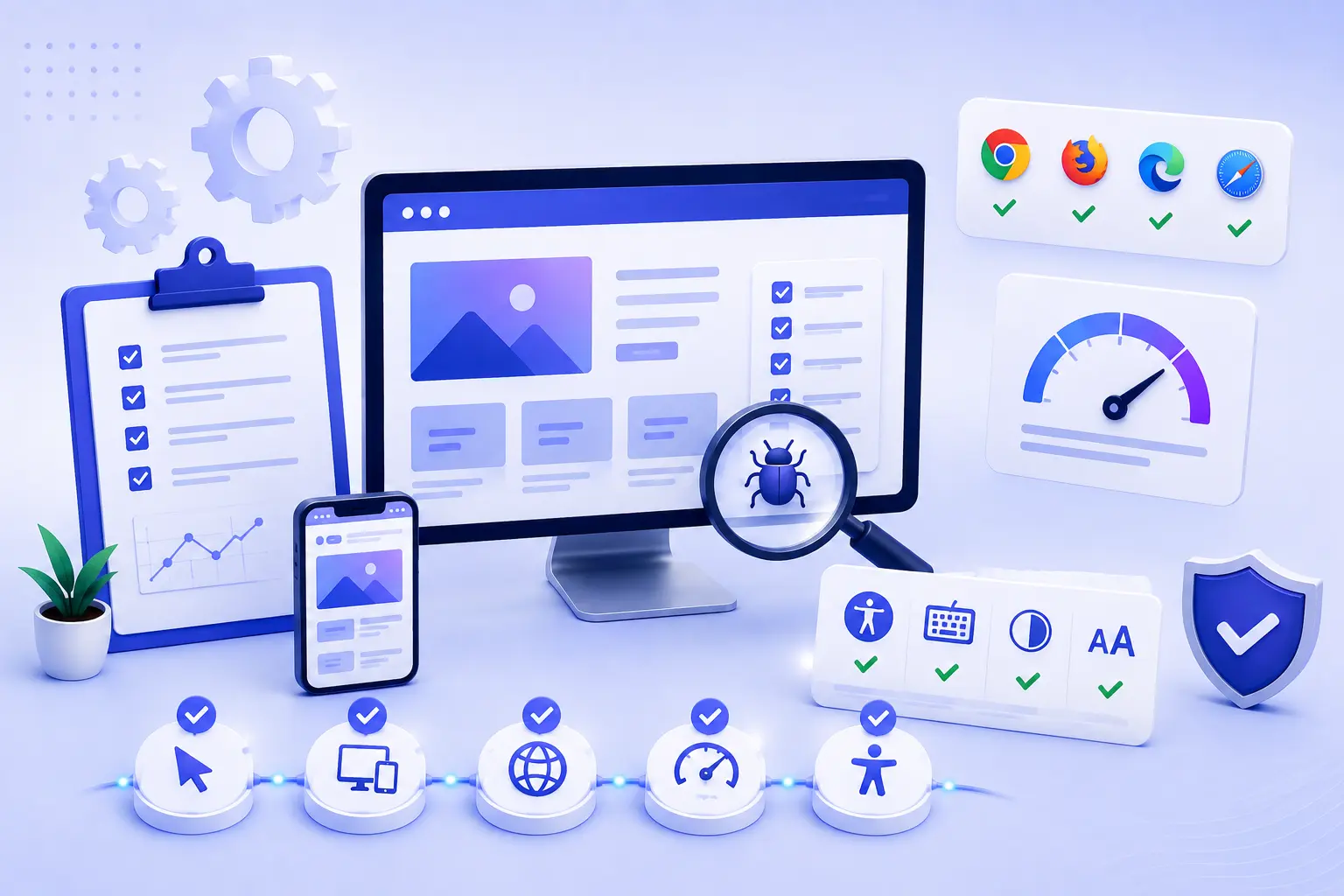
Testing is not limited to finding bugs and broken functionality. It is also about checking whether the website delivers the intended user experience and behaves correctly in different situations.
Depending on the project, testing can include functionality, interactions, responsiveness, cross-browser compatibility, performance, forms, links, and other important website behavior.
Identifying and fixing issues before users access the website reduces the risk of a poor first impression and helps ensure that the website is ready for launch.
07Launch
Website Deployment or Launch
Website deployment is the final phase of the web development process. After successfully completing the testing phase, the website is ready to be launched in the real world. Deployment transforms the website from a local development environment into a fully functional website hosted on a server and made publicly available for users.
01
Local DevelopmentBuild and prepare the website
02
Server / HostingDeploy files and configure the environment
03
Live WebsiteMake the website available to real users
A successful deployment is essential because this is where all the website files and resources are moved from the local environment to the server and made available on the internet.
If files or resources are missing or not configured properly, the website may appear broken and fail to create a strong first impression. A successful launch ensures that the website is functional and ready to provide users with the intended experience.
Launch is the stage where the efforts of the entire web development process finally come together—the ideas, planning, design, development, optimization, and testing are brought to life and made available to real users.
08Conclusion
Conclusion
Web development is not only the process of writing code, creating a website, and making it live. It is a process of evolution where you evaluate your business, understand your needs, and identify the best approach for your digital presence.
A successful website is built by asking the right questions, planning carefully, designing with users in mind, developing with quality, testing thoroughly, optimizing where necessary, and launching confidently.
Throughout this journey, you gain a better understanding of web development because you not only see each stage of the process but also understand how each stage contributes to the final result.
Ultimately, web development is the process of turning your vision and ideas into reality on a digital platform.
Start the conversation
Every Great Website Starts With an Idea.
Whether you already have a clear vision or are still figuring out what you need, we're here to have the conversation.